

1. Cavitation
The working principle of the centrifugal pump: the driving machine drives the impeller to rotate through the pump shaft to generate centrifugal force. Under the action of the centrifugal force, the liquid is thrown to the impeller outlet along the blade channel, and the liquid is collected and sent to the discharge pipe through the volute. The liquid obtains energy from the impeller, which increases the pressure energy and velocity energy, and relies on this energy to transport the liquid to the work site. While the liquid is thrown toward the impeller outlet, a low pressure is formed at the center of the impeller inlet, and a pressure difference is created between the liquid in the suction tank and the center of the impeller. The liquid in the suction tank is constantly under the action of this pressure difference. The ground enters the impeller through the suction pipeline and the suction chamber of the pump.
According to the working principle of the centrifugal pump, the liquid flow flows into the impeller under the action of the pressure difference (Pa-Pk) formed between the suction tank pressure Pa and the lowest pressure Pk at the impeller inlet. The lower the pressure Pk at the impeller inlet, the lower the suction capacity Bigger. However, if Pk is reduced to a certain limit value (currently, the saturated vapor pressure Pt of the liquid at the conveying temperature is the critical value of the liquid vaporization pressure), cavitation will occur.
2. Serious consequences caused by cavitation:
(1) Vibration and noise are generated.
(2) It has an impact on the working performance of the pump: When the cavitation develops to a certain degree, a large number of vapor bubbles will be produced, which will block the flow passage, and cause the flow rate, lift and efficiency of the pump to decrease significantly.
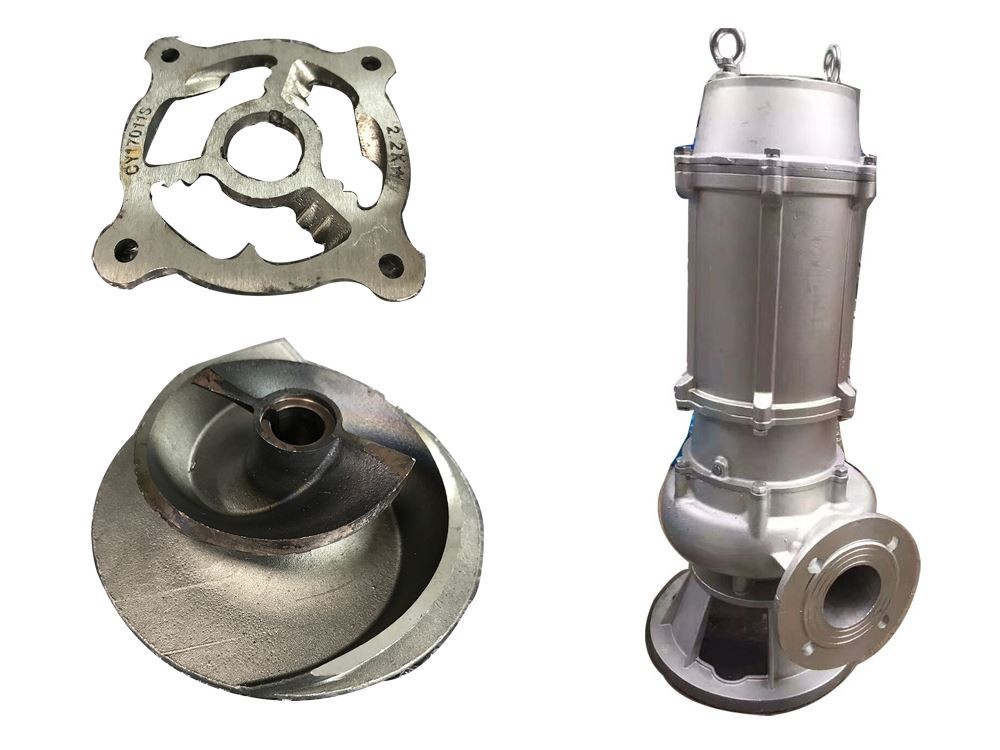
(3) The material of the flow channel will be damaged: mainly due to the fatigue erosion of the metal near the blade entrance.
3. Methods to improve the anti-cavitation performance of centrifugal pumps are:
A. Improving the structure of the pump and reducing the Δhr is a design problem of the pump.
B. Increasing the effective cavitation margin in the device: The most important and commonly used method is to use an infusion head suction device.
In addition, try to reduce the resistance loss of the suction pipeline and reduce the saturated vapor pressure of the liquid, that is, when designing the suction pipeline, choose a larger pipe diameter, shorter length, fewer elbows and valves, and the temperature of the conveyed liquid is as low as possible. These measures can increase the effective cavitation margin of the device.
Okay, let's take a look after understanding the above knowledge points. What is the function of the size of the head? It is used to change the size of the pipe diameter. So what is the use of changing the size of the pipe diameter at the inlet and outlet of the pump? The main purpose is to reduce the flow velocity of the medium in the pipeline, and reduce the flow velocity to reduce the friction when the medium flows in the pipeline.
The horizontal eccentric reducer at the inlet of the centrifugal pump generally adopts a top-flat arrangement, but when the reducer is directly connected to an upwardly curved elbow, the bottom-flat arrangement can be adopted. The reducer should be close to the pump inlet. The reason for top-level installation is to prevent the accumulation of gas in the eccentric reducer from entering the centrifugal pump and cavitation damage to the pump. When the inlet of the horizontal suction centrifugal pump is reduced in diameter, the bottom-up inlet of the pipeline adopts the top-flat installation, and the top-down inlet adopts the bottom-flat installation (to prevent gas from accumulating at the pump inlet, there are also flat installations), and the medium contains impurities And the suction speed is lower than the sedimentation speed of impurities, using bottom flat installation. The principle is that no air pockets are formed.
Generally, "the bottom is flat when going up, and the top is flat when going down."