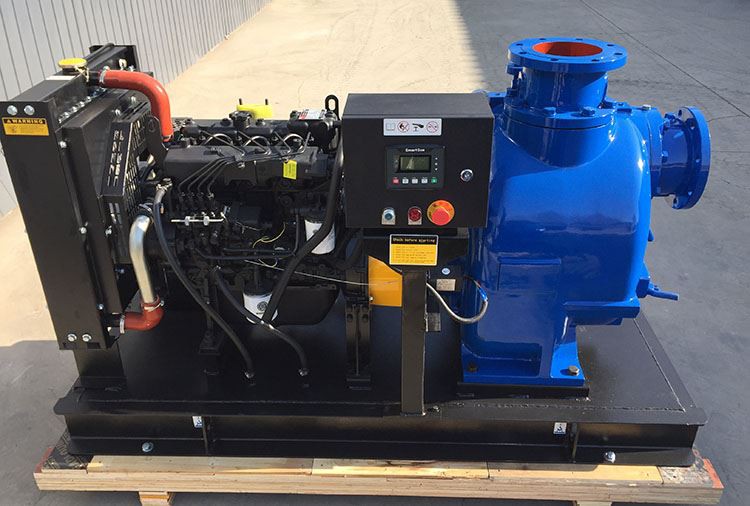


A distinctive feature that distinguishes self-priming pumps from centrifugal pumps is that they do not need to be filled with water when in use. But you must remember to fill the pump cavity with water when you use it for the first time, because the pump body itself does not store liquid. If you do not fill it in the first use, the pump will run idly and not only cannot suck the liquid. Come up, and the mechanical seal of the pump body will be burned out due to idling, so this must be paid attention to.
So does the self-priming pump need to install a foot valve?
01
If the bottom valve is not installed, what's the situation?
Generally speaking, there is no need to install a bottom valve, because the inlet of the self-priming pump has its own check valve, which is what we often call a one-way valve, so that after the pump is stopped, the liquid in the pump body cannot It is returned to the original pool and stored in the pump body, so there is no need to add liquid during the second use.
02 If installing a foot valve, what is the situation?
If the bottom valve is installed, the effect will be better, because if the one-way valve is damaged sometimes, there is a bottom valve as a guarantee, no idling will occur, and the installation of the bottom valve will effectively ensure the effective suction of the pump. Cheng!
Another special case, but if the suction height difference is too large, or the diameter of the suction pipe is too large, and the volume exceeds the amount of liquid stored in the pump cavity of the self-priming pump, it will not work properly. At this time, a bottom valve must be installed to ensure safe and fast self-priming