

Sewage treatment is an indispensable task in modern urban construction, and submersible sewage pump is one of the most important equipment. As a mechanical equipment that can pump wastewater from low to high, submersible sewage pump plays a vital role in urban sewage treatment. This article will give a detailed introduction to the principle, structure, application, selection and maintenance of submersible sewage pump.
1. Principle of submersible sewage pump
Submersible sewage pump is a mechanical equipment that pumps wastewater from low to high. Its principle is to use the motor to drive the impeller to rotate, so that the liquid forms a negative pressure area under the action of centrifugal force and impeller, thereby sucking in the wastewater at the bottom and discharging it through the outlet.
2. Structure of submersible sewage pump
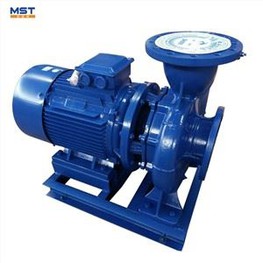
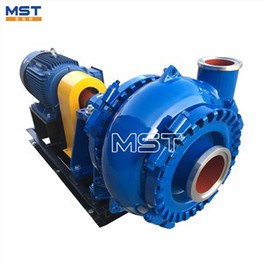
Submersible sewage pump is mainly composed of motor, casing, impeller, inlet pipe, outlet pipe, etc. Among them, the motor is the core component of the whole equipment, which realizes pumping by driving the impeller to rotate. The inlet pipe and outlet pipe are respectively connected to the sewage at the bottom and the discharge pipe above, which plays the role of conveying liquid.
3. Application of submersible sewage pumps
Submersible sewage pumps are widely used in urban sewage treatment, industrial wastewater treatment, farmland irrigation and other fields. In urban sewage treatment, submersible sewage pumps are mainly used to pump underground sludge, wastewater, etc. to ground treatment sites. In industrial wastewater treatment, different types of submersible sewage pumps can be selected according to different treatment requirements.
4. How to select a submersible sewage pump
When selecting a submersible sewage pump, the following aspects need to be considered:
1. Flow rate: the maximum liquid flow rate that can pass through the submersible sewage pump per unit time, usually in cubic meters per hour.
2. Head: the height difference that the liquid needs to overcome from the inlet to the outlet.
3. Material: factors such as the type of liquid to be transported, viscosity, and temperature need to be considered.
4. Environment: whether the installation environment is flammable and explosive, whether it is corrosive, etc. needs to be considered.
5. Maintenance: the equipment operating cost and the difficulty of maintenance need to be considered.
5. Maintenance of submersible sewage pumps
In order to ensure the normal operation of the submersible sewage pump, regular maintenance is required. Specific measures include:
1. Regularly check whether the motor, impeller, seal and other parts are damaged.
2. Clean the debris and sludge in the inlet and outlet pipes.
3. Regularly replace lubricating oil and seals.
4. Avoid long-term dry running or idling during use to avoid damage to the equipment.